
Toasting: managing variation in toasting oak
Despite the apparent simplicity of ordering barrels by toast level, significant variability can arise both within a single batch and across vintages. Understanding the sources of these variances helps explain why nominally identical barrels sometimes perform differently in the cellar.
The objective is not to eliminate variation entirely. Oak is a natural material, and some degree of variation is inevitable. The goal is to narrow the spread around a predictable target, so barrels perform consistently from batch to batch and vintage to vintage.
Why variation matters
Toasting influences aroma, flavour, tannin structure, oxygen transfer, and the overall integration of oak within a wine. Small differences during production can therefore have a noticeable impact on the finished result.
A touch of variation can contribute to complexity within a barrel programme. Too much variation, however, can make it difficult to maintain a consistent house style.
For wineries investing heavily in oak, consistency is not about making every barrel identical. It is about ensuring barrels perform within an expected range.
Sources of variation in toasted barrels
Despite the apparent simplicity of ordering barrels by toast level, significant variability can arise both within a single batch and across vintages.
Fire energy density and spectrum
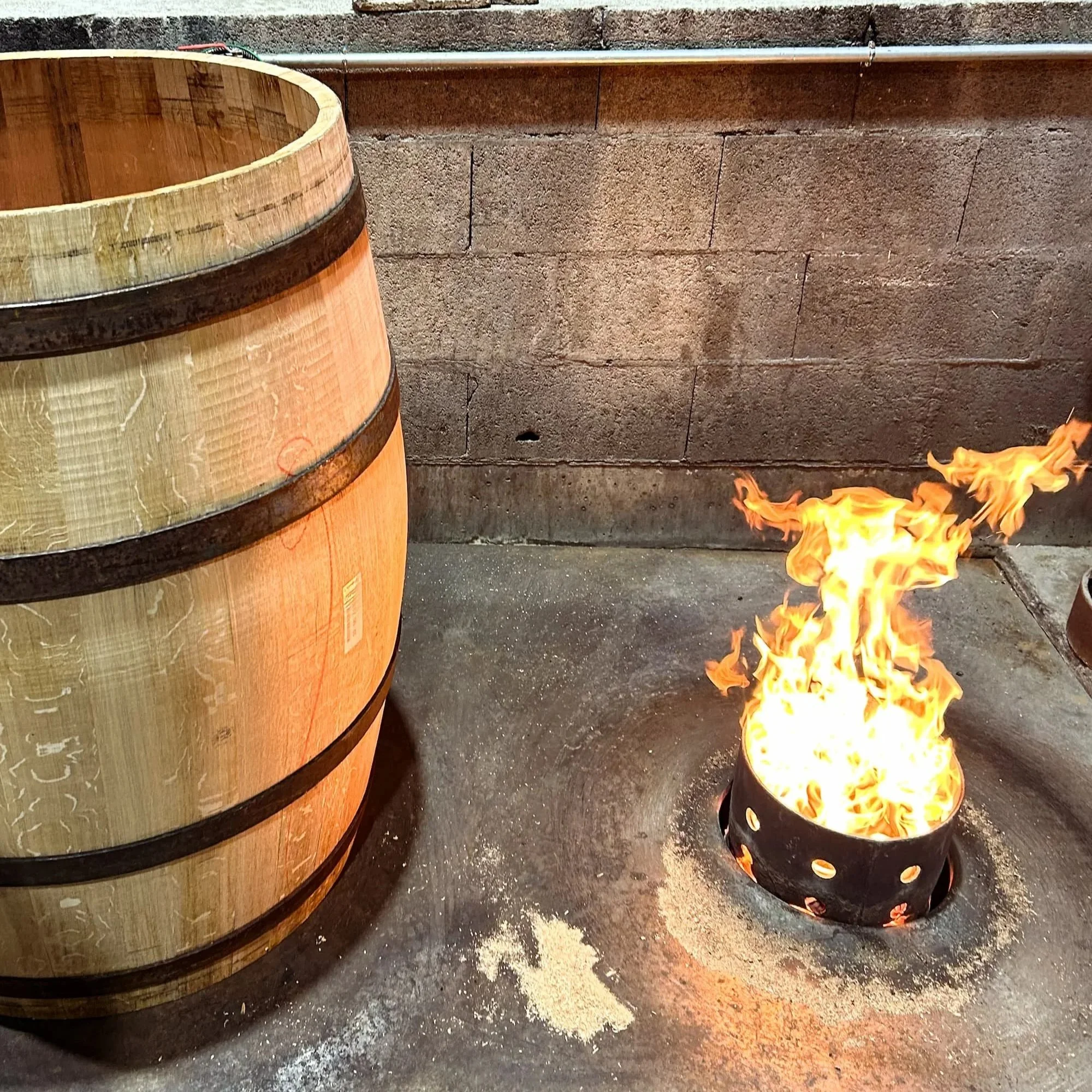
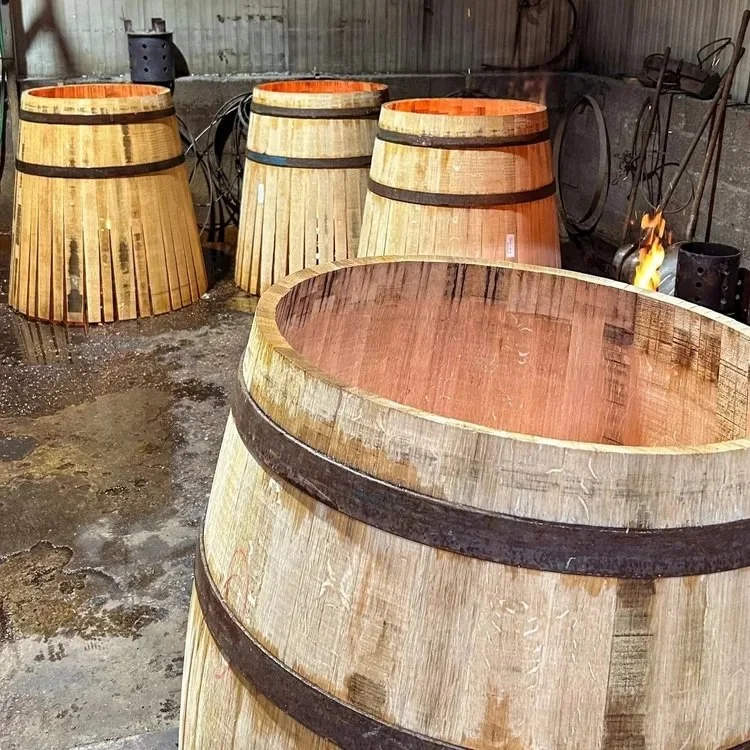
Traditional wood-fire toasting is inherently dynamic. Flame intensity, ember distribution, and airflow can fluctuate, meaning two "medium toast" barrels may have followed very different time–temperature curves.
Ember-based fires deliver uniform radiant and convective energy at approximately 180–220°C, whereas open flames can exceed 300°C and create localised hot spots. Coopers targeting precision typically regulate fire temperature through ember replenishment, air draw, and regular barrel rotation rather than visual judgement alone.
Thermal gradient management
Gradual temperature escalation minimises steep gradients through the stave, producing more predictable lignin conversion ratios. Sudden exposure to peak flame temperatures increases heterogeneity of aromatic precursors.
Barrel rotation frequency
Continuous rotation – typically one full revolution every two to three minutes – helps ensure circumferential uniformity. Variations of even 20 seconds per quadrant can generate measurable differences in thermal load.
Stave moisture
Differences in seasoning duration, storage humidity, and ambient conditions affect how heat penetrates the wood. Wetter staves absorb energy differently, altering degradation pathways for both tannins and aromatics.
Excess moisture buffers temperature but inhibits penetration, resulting in underdeveloped interior zones. Over-dry staves exceed target surface temperatures within minutes, promoting surface charring and phenolic imbalance.
Grain and stave thickness
Tighter grain and thicker staves slow heat diffusion, shifting the depth and intensity of the toasted layer within each barrel.
Wood origin and vintage
Oak from different forests or growth seasons carries different baseline chemistry. As a result, an identical toasting protocol can produce different aromatic and tannin outcomes from year to year.
Ambient conditions
Relative humidity, airflow, and fuel moisture content all influence combustion chemistry and radiant efficiency. Modern facilities often maintain controlled toasting environments at 40–60% relative humidity to help stabilise outcomes.
Cooper fatigue
In a similar manner to judges at wine competitions needing a break when all wines start tasting the same, coopers in even short-run production settings may suffer from olfactory fatigue. What they perceive through the aroma of a toasted barrel can gradually move towards the mean of all the barrels they have recently toasted rather than reflecting the true profile of the barrel in front of them.
Despite technological monitoring, tactile and olfactory evaluation remains indispensable. Experienced toasters assess acoustic cues, surface gloss, and transient volatiles emitted from the wood to refine timing.
Cooper technique
Each cooper has their own technique. These differences may include stave positioning within barrels of varying widths or the force used when fitting hoops. In both cases, subtle differences may influence oxygen transmission rates through stave joints, potentially affecting wine development during long élevage.
Managing variation
Toasting has recently come to represent a crossroads in the cooperage industry.
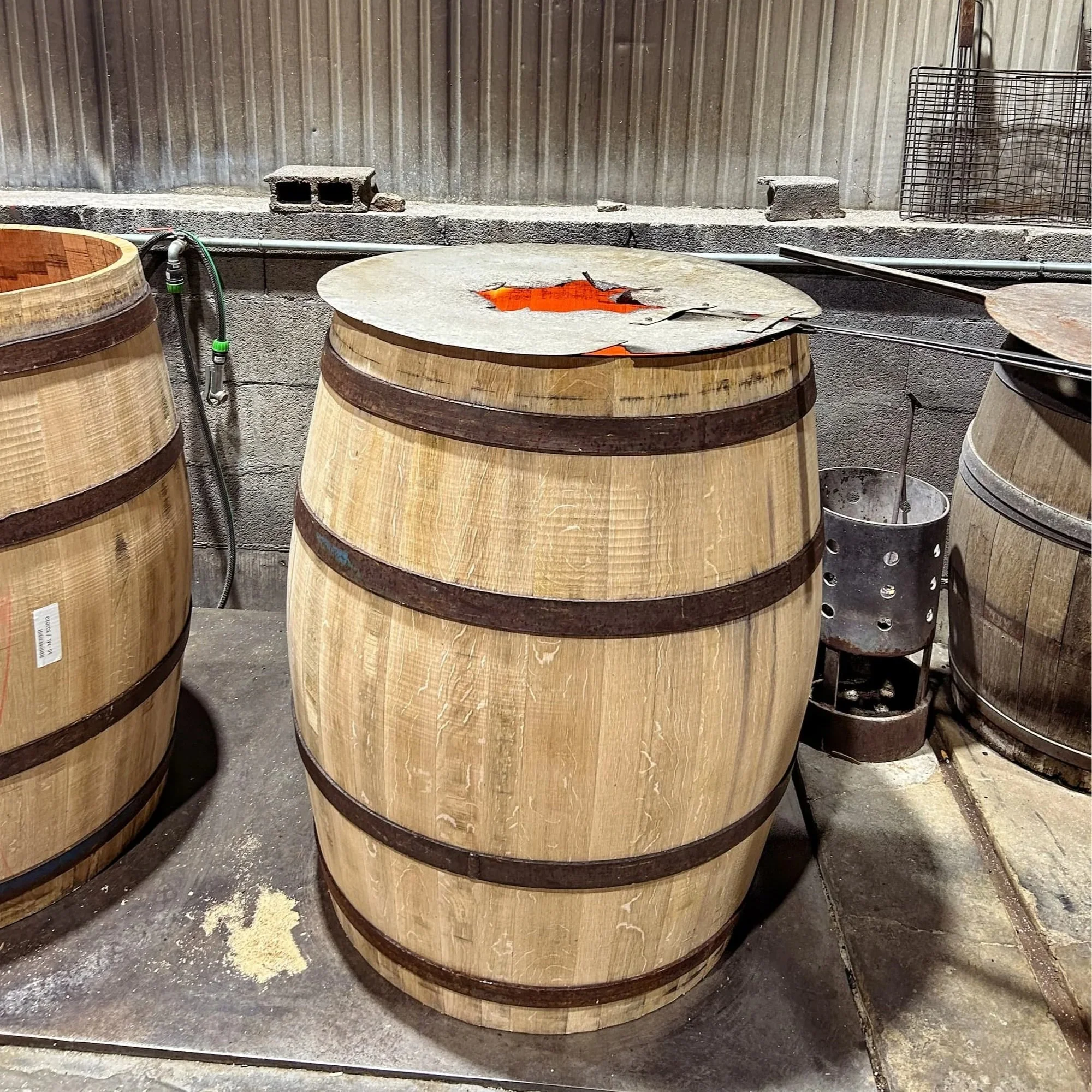
Some larger cooperages are adopting a more industrial approach to barrel production by integrating quantitative methods into traditional skill sets. Infrared thermography, embedded thermocouples, and digital data logging allow real-time analysis of temperature distribution and heat flux. Each barrel can be assigned a "toast signature", correlating recorded thermal curves with post-toast sensory evaluation.
The tannin-related outcomes of this approach are valid, but the aromatic outcomes still need to be proven. Its key limitation is that it focuses on material inputs and processes rather than directly measuring sensory outcomes.
Alternatively, many small to medium-sized cooperages continue to rely primarily on the artisanal experience of the cooper. That said, temperature measurement on both the internal and external faces of the barrel is increasingly monitored using handheld infrared thermometers, providing another source of real-time information during the toasting process.
It may be appropriate to discuss with your cooperage how they mitigate factors that can lead to barrel variation. The most effective programmes generally combine several layers of control.
Stave selection and sorting
Grouping staves by grain density and thickness reduces within-batch variation by ensuring similar heat response across the wood.
Equally important are moisture assessments before toasting and density sorting of staves. Together, these interventions help improve raw material uniformity, one of the principal drivers of reproducible sensory outcomes.
Analytical validation
Equipment such as electronic noses can be used to benchmark wood chemistry during and after toasting, helping detect batch-to-batch drift before barrels leave the cooperage.
Controlled heat sources
Controlled heat sources allow tighter regulation of temperature and heat flux.
Time-temperature profiling
Defining thermal curves for each toast level, rather than relying solely on broad categorical descriptors, can improve reproducibility across batches. However, outcomes remain influenced by moisture content, seasoning variables, climatic conditions, and intrinsic variation within the oak itself.
Stave moisture monitoring
Conditioning stave moisture to a consistent range before toasting helps ensure uniform heat penetration across all barrels within a production run.
Sensory calibration
Regular sensory evaluation of toasted staves or trial barrels helps detect stylistic drift and keeps production aligned with target profiles.
Transparent supplier partnerships
Close collaboration between wineries and cooperages, including detailed toast specifications, batch documentation, and structured feedback loops, is essential for maintaining consistency across vintages.
All that said the adoption of these technologies is by no means universal with many highly respected cooperages electing to maintain an artisanal approach to coopering, rather than heading in a more "industrial" direction. This could be for a number of reasons - they back their artisanal knowledge to produce a better outcome; they want to maintain their brand story and the romance of hand working oak or they or their customers see the merits for some other reason.
Making it count in the glass
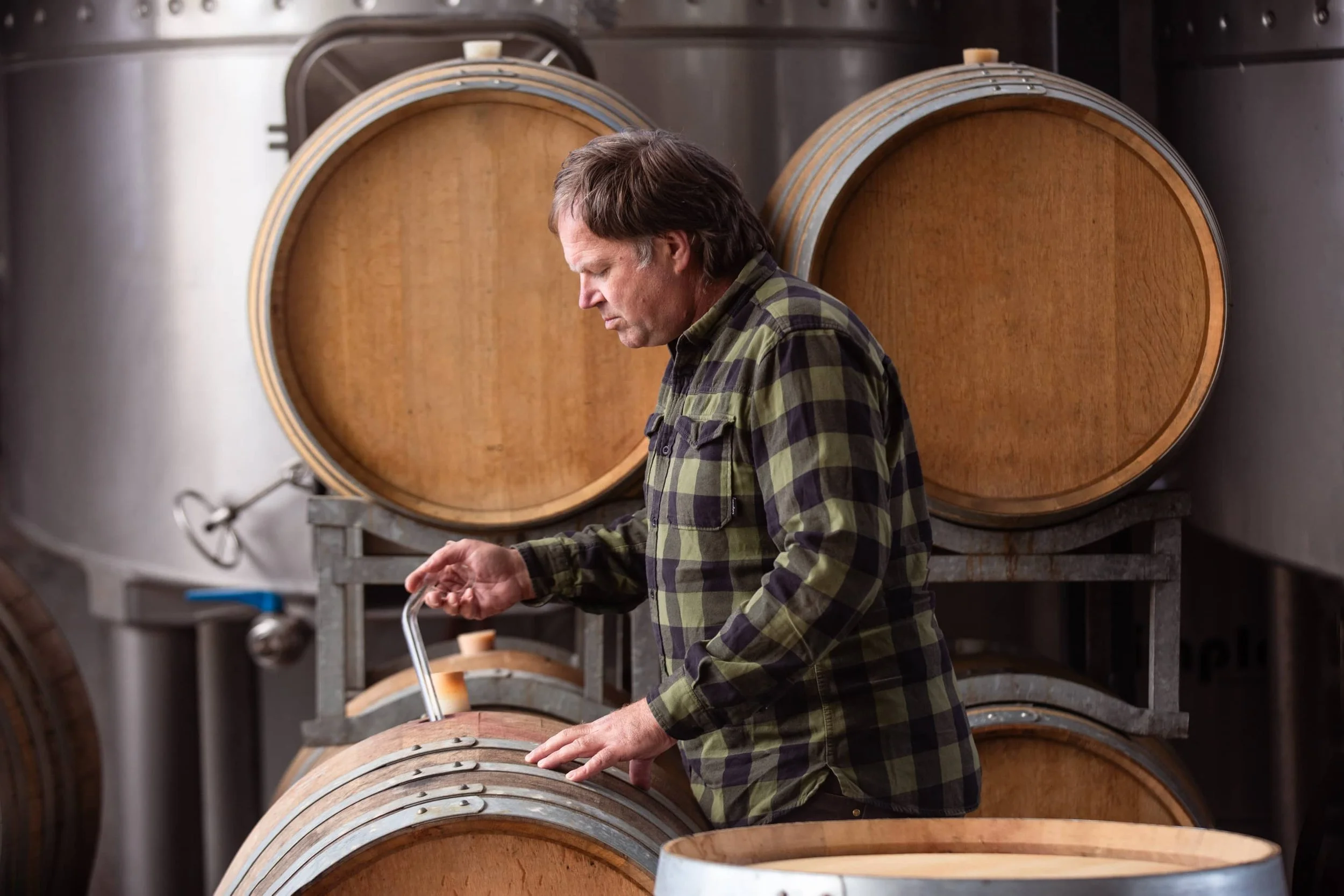
For winemakers and their brand teams, toasting is a rich storytelling tool as much as a technical specification. It connects the artisanal craft of the cooper - the careful calibration of flame, time, and wood - directly to the flavors in the glass that consumers recognize and return to.
Used thoughtfully, toasted oak helps explain why one Chardonnay feels opulent and creamy while another is focused and mineral, or why two reds from the same vineyard deliver entirely different textural and aromatic personalities. It reinforces the idea that great wine is not only grown in the vineyard but shaped, vintage by vintage, barrel by barrel - through the deliberate craft of toasting.
To finish
Toasting is often discussed in terms of flavour, but consistency is equally important. The challenge is not simply transforming oak into a desired aromatic profile. It is achieving that profile reliably, despite the natural variation that exists within the wood itself.
Grain selection, seasoning, moisture control, heat management, and sensory evaluation all contribute to the final result. The most successful cooperages recognise that consistency comes not from eliminating variation altogether, but from understanding it, managing it, and continually narrowing the spread around a desired outcome.
For winemakers, that consistency provides confidence that each barrel will support the style, quality, and character they are working to achieve.
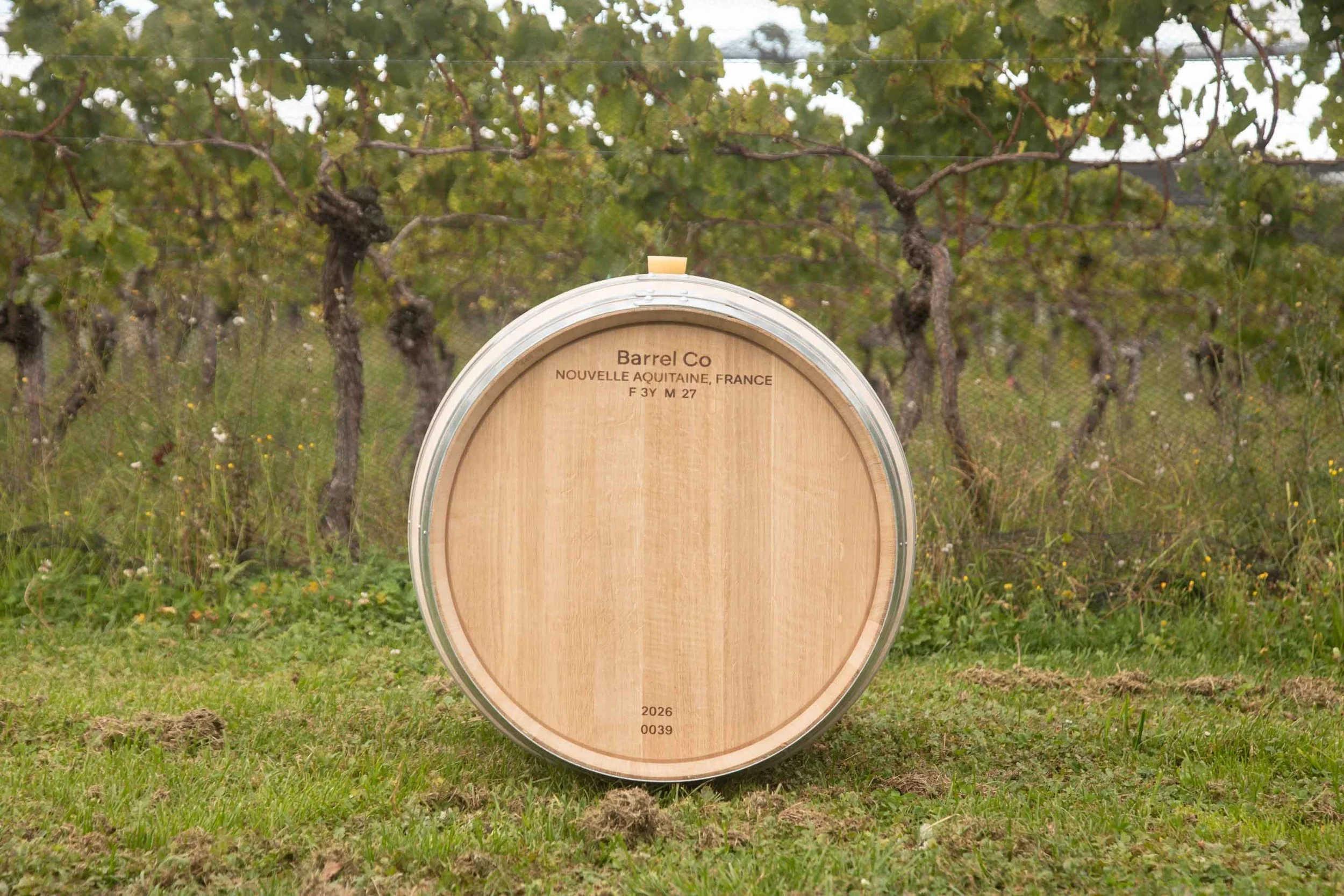
Barrel Co was created with a long view: to build a local cooperage model shaped around New Zealand’s climate, winemaking styles, and sustainability goals.
We’re not an agent. Barrel Co is a New Zealand–owned barrel supplier with our own French cooperage partner.
As we grow, our plan is to bring barrel manufacturing to New Zealand shores using French oak, shortening the supply chain to achieve cost efficiency and reduce the carbon footprint of every barrel.
